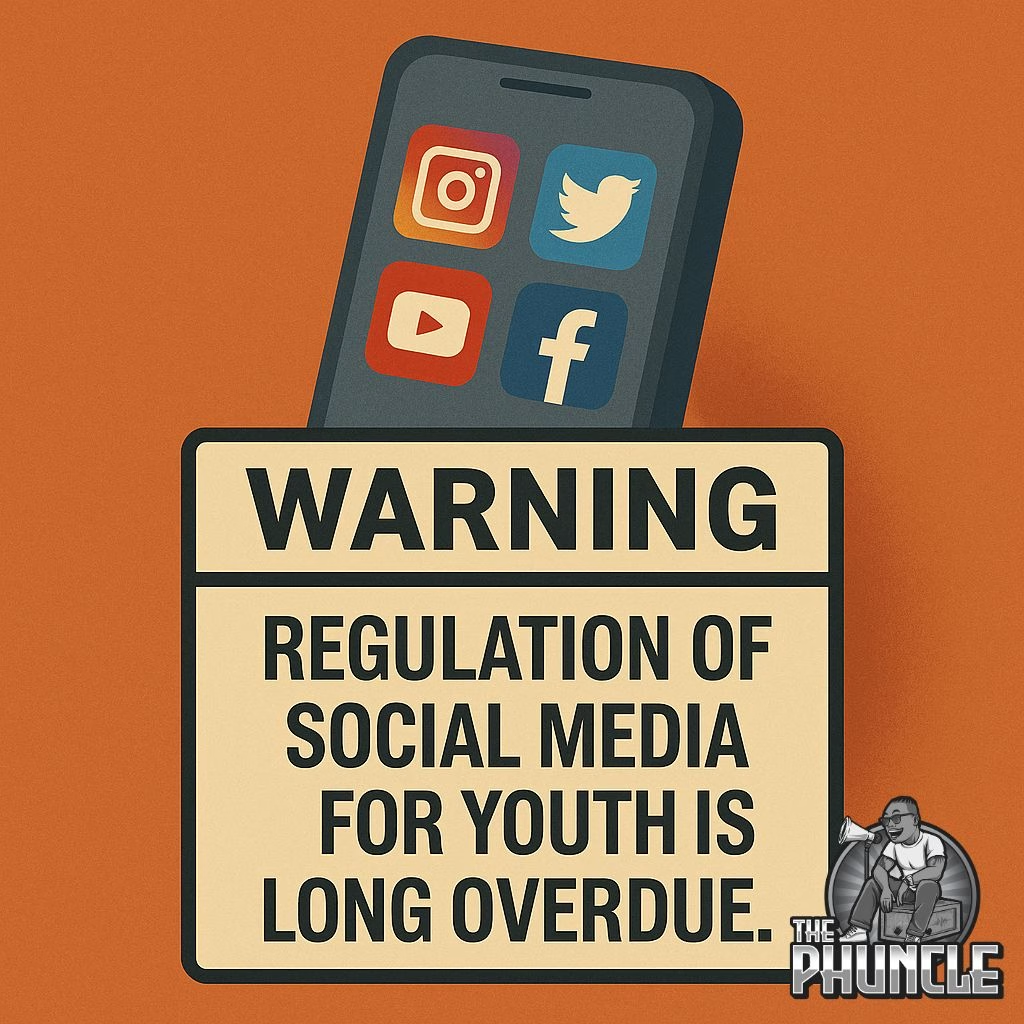
Social Media Needs a Warning Label. And Your Kid Still Needs You.

The quick version: regulating teen social media is overdue, and it’s the right call. But a ban on the kid and a rule on the app aren’t the same thing, and no law raises your child. Put the rules on the addictive design, then do the one thing only you can do at the dinner table: swap “get off the phone” for “what’s got you on there tonight?”
They put a warning on cigarettes. The Surgeon General says social media’s earned one too. Picture the label:
⚠️ WARNING: Contains algorithms built to be addictive and to exploit your brain.
⚠️ CAUTION: Heavy use is linked to anxiety, depression, and nonstop comparison.
⚠️ DANGER: May cause lost hours, wrecked sleep, and split attention.
Big Tobacco printed its warning after decades of denial.
Big Tech’s still stuck on “it’s not us, it’s you.” They hired the neuroscientists, studied the casino floor, weaponized FOMO, then told you to just put the phone down.
So yes, regulate it. Just know what a rule can and can’t do.
Think of it like a sandbox. Right now it’s the size of the whole internet, and we drop a developing brain in the middle with a “good luck.”
Good policy shrinks the size of the sandbox. No autoplay, no infinite scroll, no addictive feed for kids.
It doesn’t wall your kid out of the yard. It makes the space small enough to coach in.
Policy has the power to constrain the interwebz. Pointed right, it constrains what reaches your kid before they’ve built the skill to handle it, and that buys you room to teach.
Kind of like a fence around the pool to lower the chances of them accidentally falling in.
A ban on the kid is abstinence. A rule on the machine is design.
Here’s the line the headlines smear over.
Banning the kid is abstinence, and we’ve run that experiment.
“Just don’t, till we say so” builds zero skill.
It only delays the moment, then hands an unprepared kid the exact thing you hid.
Abstinence-only sex ed didn’t make safer teenagers. It made blindsided ones. You don’t hand a sixteen-year-old a permit and say “take the highway” just because they’re of age.
Regulating the machine is the opposite move.
Shrink the sandbox, then coach in it.
The National Academies’ 2024 review says the phone’s a factor, not the whole cause.
So you regulate the engineered part, and you parent the human part.
None of this means you’re a bad parent.
You’re outresourced, one tired human against companies that hire the sharpest minds alive to keep your kid scrolling.
Rules even that fight. They’re the referee you’ve been screaming for.
What to do tonight, while the lawmakers argue
Tonight, when the phone’s out at dinner and the heat climbs, don’t say “get off the phone.” Try six words:
“What’s got you on there tonight?”
You’re trading an order the teenage brain fights for a question it answers. These insights interrupt automatic behavior and increase awareness.
So here’s the real question, not a rhetorical one: if you wrote the warning label for the app in your kid’s hand tonight, what would yours say?
FAQ
Isn’t regulating social media just the nanny state?
We already regulate what’s built to hook a young brain. This isn’t babysitting your kid. It’s not making one parent out-engineer a trillion-dollar machine alone. Rules on the design don’t replace your parenting. They give it room.
Banning it vs regulating it, what’s the difference?
A ban locks your kid out and teaches nothing, so they age in with zero practice. Regulating the design leaves the space open but takes the slot machine off the dashboard, so they learn while you coach. One’s abstinence. The other’s driver’s ed.
The laws aren’t passed yet. What do I do now?
Change the two things you control tonight: the room around the phone and your own response. Trade orders for curiosity. A calm question defuses far more than a confiscation because it works with the teenage brain rather than against it.
Get the free guide
The phone fight is the surface, and the phone is just one trap. The five teen health concerns every parent should have on their radar, and what to actually do about each, are in my free guide.
Grab it, and I’ll send you the first move to try tonight. Get the free guide: Five Teen Health Concerns.
And if the feed’s the trap that worries you most, that’s the one the Teen Trap Map breaks down next.
Dorian Johnson, MPH, is a National Board Certified Health and Wellness Coach and a Certified Digital Thriving Educator through the Harvard Center for Digital Thriving. He’s been featured in Parents, SheKnows, Ebony, and on The Tamron Hall Show.
Sources
- U.S. Surgeon General’s Advisory: Social Media and Youth Mental Health (HHS)
- Mass. Senate feature-restriction bill, 38-2 (WBUR)
- Social Media and Adolescent Health, consensus report (National Academies, 2024)
- Three Decades of Research: The Case for Comprehensive Sex Education (Goldfarb & Lieberman, JAH, 2021)
- Abstinence-Only-Until-Marriage: An Updated Review (Santelli et al., JAH, 2017)
