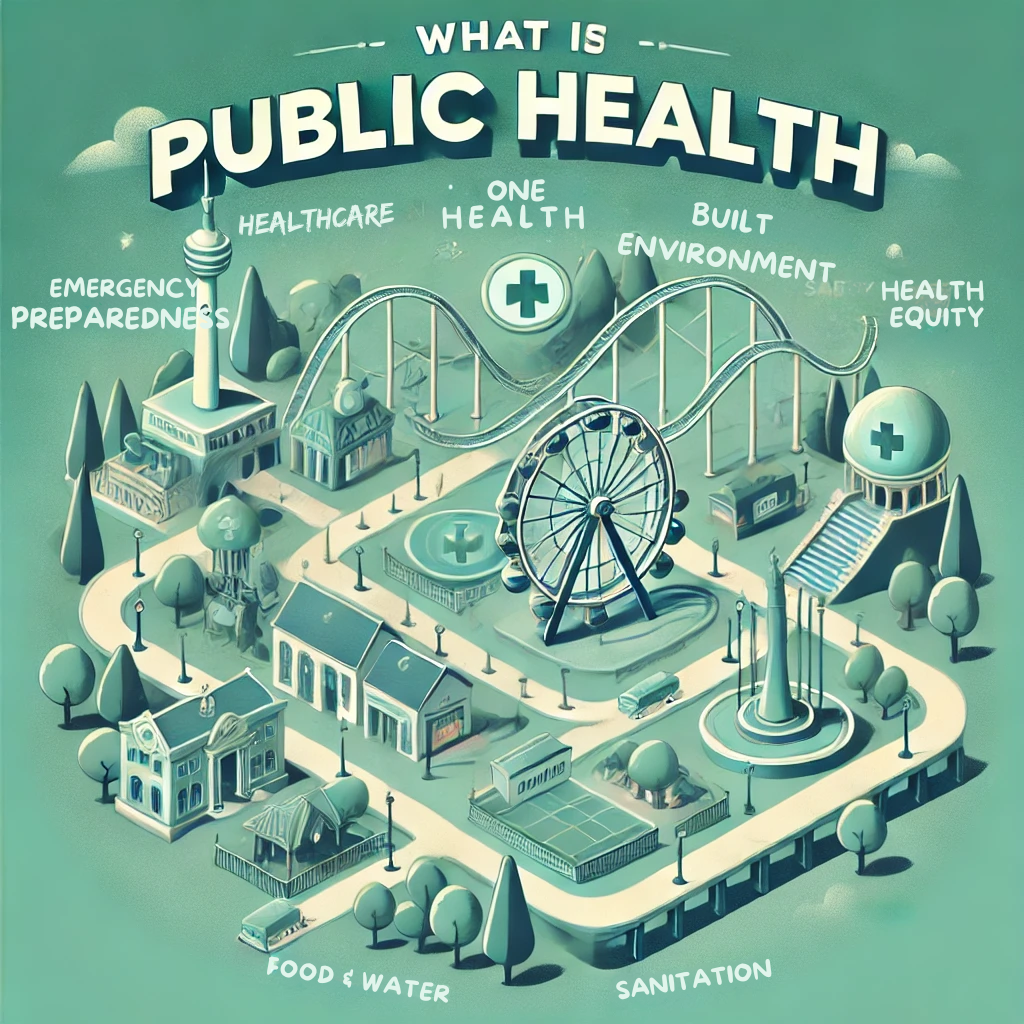
What Is Public Health? | PHuncle Breaks It Down

Let me make this super simple:
Public health is about keeping entire communities healthy and safe, not just one person at a time. It’s like having a whole team of people working to stop people from getting sick in the first place, rather than waiting to treat them after they’re already ill.
Think of it like running a huge theme park. The people who operate the park don’t just wait for accidents to happen – they work hard to make sure everyone stays safe and healthy while having fun. They check the rides before opening, make sure the food is safe to eat, keep the bathrooms clean, and have plans ready in case something goes wrong.
That’s exactly what public health does for our communities. But instead of rides, we’re checking on:
- Clean water to drink
- Clean air to breathe
- Safe food to eat
- Places to exercise
- Ways to prevent disease
- Plans for emergencies
And just like theme park workers don’t focus on just one visitor at a time, public health focuses on entire communities. We’re not the doctors treating you when you’re sick (that’s healthcare) – we’re the ones working to keep you from getting sick in the first place.
Public health is working at its best when you don’t even notice it – just like a well-run theme park. You’re not thinking about the water quality when you get a drink from the fountain. You’re not wondering if the food court passed inspection. You’re not worried about emergency exits. Why? Because someone’s already thought about all of that for you.
Just like a theme park needs different teams working together – safety inspectors, food service, cleaning crews, first aid staff – public health involves many different people working to keep communities healthy:
- Scientists tracking disease patterns
- Experts checking environmental safety
- Educators teaching about health
- Policymakers creating safety rules
- Community workers connecting people to resources
Here’s another way to think about it: If our theme park is the community, then:
Healthcare is like:
- Individual ride operators helping one rider at a time
- First aid stations treating injuries after they happen
- Customer service dealing with specific complaints
- Maintenance fixing broken equipment
While Public Health is like:
- Park operations making sure ALL rides are safe
- Safety teams preventing accidents before they happen
- Systems designers making the whole park accessible
- Planning team creating healthy environments for everyone
Healthcare is crucial – just like you need ride operators and first aid stations. But public health? That’s the whole system working to make sure fewer people need first aid in the first place.
The Three P’s of Public Health: How We Keep the Park Running
Public health has three main jobs in our community “theme park.” Let’s break them down:
Prevent: Stopping Problems Before They Start
Just like theme parks inspect rides before anyone gets hurt, public health works to prevent health problems before they happen:
- Vaccinations to stop disease spread
- Food safety inspections
- Air quality monitoring
- Water system testing
- Health education programs
Protect: Keeping Everyone Safe
Like park security and safety teams, public health protects communities from health threats:
- Disease outbreak response
- Emergency preparedness
- Environmental health monitoring
- Workplace safety standards
- Consumer safety regulations
Promote: Creating Healthy Environments
Think of this like designing a park where it’s easy for everyone to have fun safely. Public health promotes healthy choices by:
- Creating walkable communities
- Ensuring access to healthy foods
- Building safe spaces for activity
- Supporting mental health resources
- Developing health education programs
Public Health: More Departments Than Your Favorite Theme Park
Just like how a theme park has different zones – from thrill rides to kiddie areas, from food courts to entertainment venues – public health covers a LOT of ground. Let me show you just how many areas public health touches:
Environmental Health (The Park’s Environment)
- Air quality monitoring (like Beijing’s air pollution crisis)
- Water safety (think Flint water crisis)
- Climate change impacts
- Housing conditions
- Noise pollution
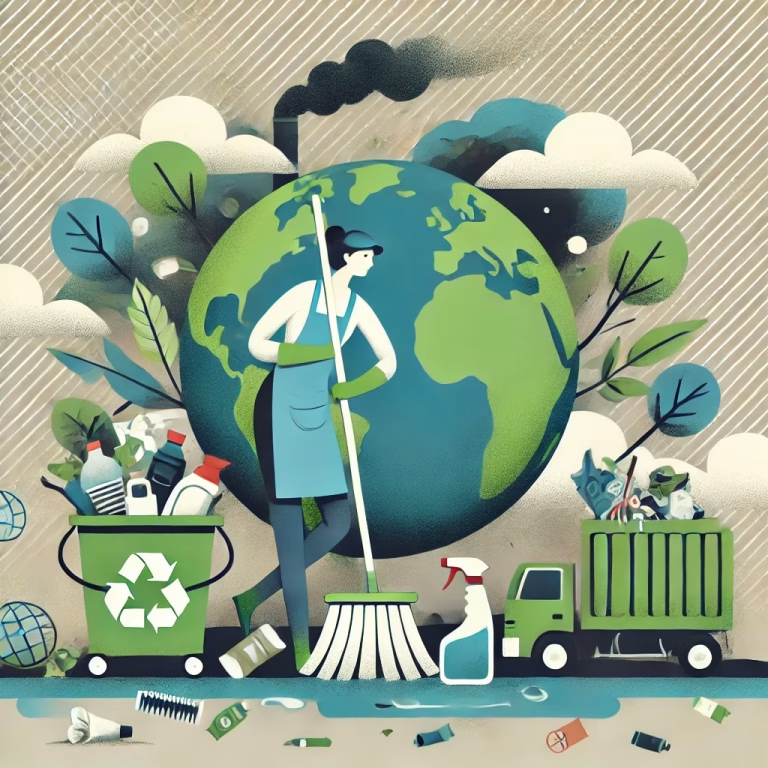
- Waste management
Disease Control (Safety Protocols)
- Tracking disease outbreaks (COVID-19 response)
- Vaccination programs (global polio elimination)
- Infection prevention
- Health screenings
- Contact tracing
Maternal and Child Health (Family Services)
- Prenatal care access
- Child nutrition programs
- School health services
- Family planning
- Child safety measures
Mental Health (Guest Services)
- Community support programs
- Crisis intervention
- Suicide prevention
- Substance use programs
- Mental health awareness
- Stress reduction initiatives
Occupational Health (Staff Safety)
- Workplace safety standards
- Ergonomic guidelines
- Chemical exposure limits
- Heat stress prevention
- Noise level control
- Worker wellness programs
City Planning (Park Layout)
- Walkable neighborhoods
- Green spaces
- Transportation access
- Food access
- Safe recreation areas
- Community gathering spaces
Emergency Preparedness (Crisis Response)
- Natural disaster planning
- Pandemic response
- Mass casualty preparation
- Emergency communication
- Community resilience
- Resource distribution
And here’s what’s wild: this isn’t even the full list! Public health really be wearing SO many hats, its like that theme park that keeps adding new attractions – always expanding to meet community needs.
When All the Park Zones Connect: The Web of Public Health
Here’s what makes public health hit different: everything connects. Just like how a problem in one part of a theme park affects the whole experience, public health issues are all tangled up. Let me show you:
The Ripple Effect
Take city planning (park layout) for example:
- Poor street lighting affects safety
- Which impacts physical activity
- Which affects mental health
- Which influences work performance
- Which affects family wellbeing
- Which loops back to community health
Or think about air quality:
- Environmental health issue? Obviously.
- But also affects maternal health
- And children’s ability to play outside
- Which impacts physical health
- And mental wellbeing
- While adding healthcare costs
- Creating economic strain
- Leading to stress…
and the cycle continues.
The Public Health Paradox: Why Nobody Notices a Well-Run Park
Now here’s the tricky part about public health: when it’s working best, it’s invisible. Think about it – nobody walks through a clean, safe theme park saying “wow, look at all these accidents that AREN’T happening!”
This creates what we call the Public Health Paradox:
- When public health works, problems don’t happen
- When problems don’t happen, people don’t notice
- When people don’t notice, funding gets cut
- When funding gets cut, problems start happening
- Only then do people ask “why didn’t we prevent this?”
Beyond the Paradox: Other Public Health Challenges
The invisibility problem isn’t our only challenge. Let me break down what else public health is up against:
The Long Game vs. Quick Fixes
Imagine trying to convince theme park investors that preventing problems is better than fixing them. That’s our daily struggle:
- Prevention takes years to show results
- Treatment shows immediate impact
- People want quick solutions
- Long-term investments are harder to justify
- Success means nothing happening (try putting that on a quarterly report!)
System-Level Solutions in an Individual-Focused World
“Just make better choices!” Yeah, like it’s that simple. Try making healthy choices when your neighborhood has no grocery stores, unsafe parks, and air that’s trying to give you asthma. That’s the thing about systems – they shape our options before we even get to “choose.”
- People focus on individual responsibility
- Systems feel too big to change
- Change requires collective action
- Results aren’t immediately visible
Building a Better Park: Making Public Health Work
But here’s the good news: just like theme parks have evolved from simple carnivals to complex entertainment systems, public health is adapting too. Here’s how we’re working to make things better:
Tell Better Stories
Instead of just throwing statistics at people, we need to show what public health success looks like:
- Lives saved through vaccination programs
- Communities transformed by better design
- Health gaps closed through targeted programs
- Diseases stopped before they spread
- Generations growing up healthier
Make Prevention Visible
We need to get better at showing the disasters that didn’t happen:
- Track and share “problems prevented”
- Document health improvements
- Show cost savings from prevention
- Highlight community benefits
- Celebrate public health wins
Build Community Power
Just like a theme park needs engaged visitors to thrive, public health needs active community participation:
- Community health workers sharing knowledge
- Local leaders advocating for resources
- Residents identifying neighborhood needs
- Youth getting involved in health initiatives
- Communities designing their own solutions
Connect the Dots
We need to help people see how public health connects to everything they care about:
- Better schools = better health
- Cleaner air = stronger communities
- Safe neighborhoods = active families
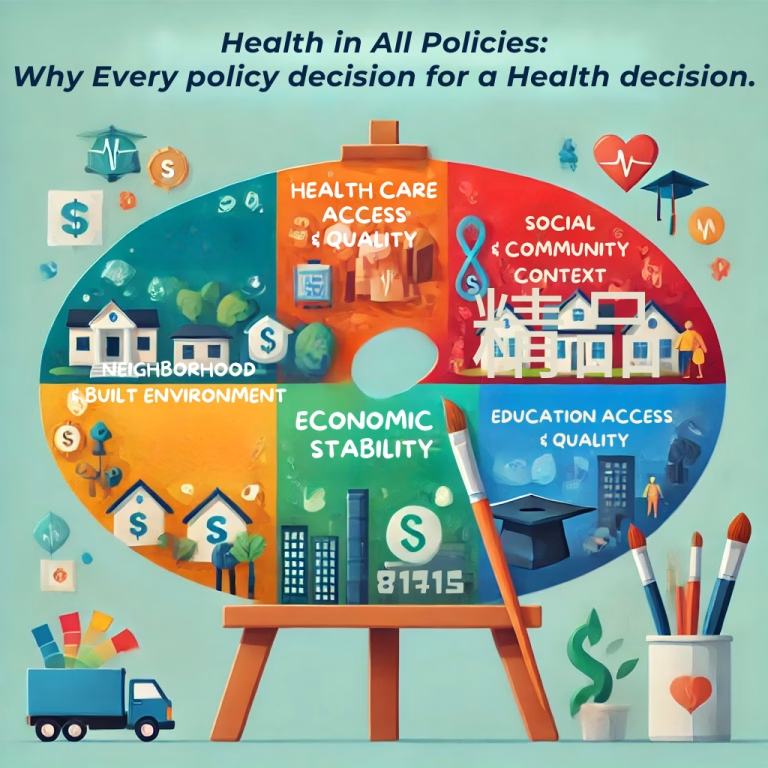
- Good jobs = healthier lives
- Strong communities = resilient health
Invest in the Future
Just like theme parks need regular upgrades to stay relevant, public health needs consistent support:
- Stable funding for prevention
- Investment in public health workforce
- Resources for new challenges
- Support for research and innovation
- Long-term commitment to community health
The Park Never Closes: Public Health’s Ongoing Mission
Let me bring this full circle: Public health is like running the world’s most important theme park – one where the stakes are people’s lives and wellbeing. We don’t just work to prevent problems, protect communities, and promote health – we’re trying to create a world where everyone has a fair shot at a healthy life.
And just like you probably never think about all the people working to keep a theme park safe and fun, you might not notice public health working in your community. But we’re here – checking the water, monitoring the air, tracking diseases, designing healthier spaces, and planning for emergencies you hopefully never face.
The challenges are real: invisible successes, complex systems, and the constant push for prevention in a treatment-focused world. But here’s what makes this work worth it: every life improved, every disease prevented, every community made healthier is a win for all of us.
Because at the end of the day, we’re all in this park together. And the more people who understand and support public health, the better we can make it for everyone.