Social Determinants of Health: Why Your ZIP Code Matters More Than Your Genetic Code | PHuncle Explains

Did you know that your ZIP code can predict your life expectancy better than your genetic code? That’s not just a catchy phrase – it’s backed by research showing up to a 15-year difference in life expectancy between neighborhoods just a few miles apart!
Think about health like a band trying to make music. Your genetics? That’s just the sheet music. But to actually make that music happen, you need instruments (resources), a place to practice (environment), music education (opportunities), bandmates (community), and a whole support system to keep it all together.
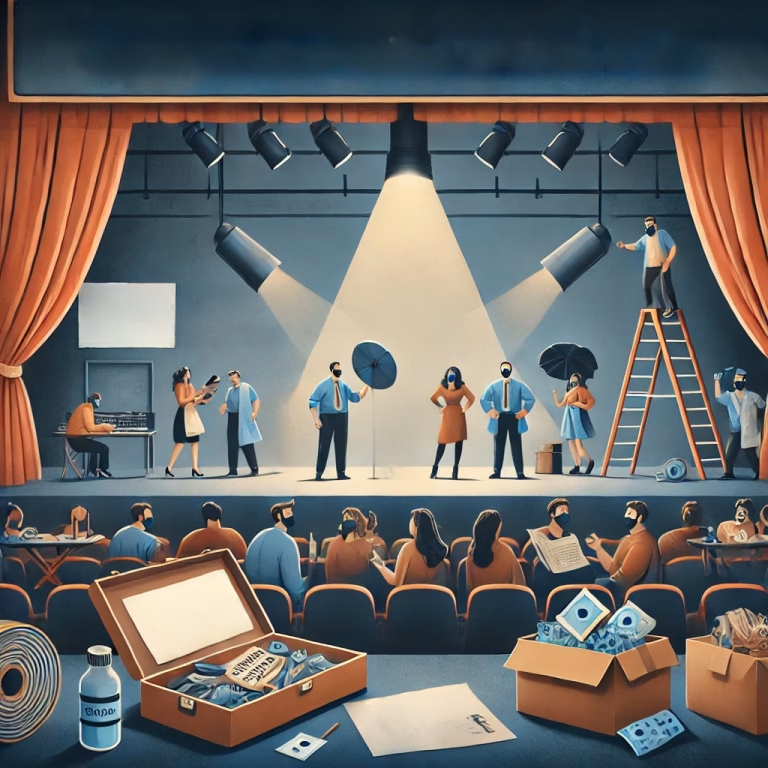
Some communities got the full orchestra setup – good instruments, proper training, sound-proof practice rooms, supportive music programs. Others? They’re trying to make music with broken instruments, no practice space, cut music programs, and constant noise interference. Before anyone plays a single note, the conditions for success are already unequal.
Let me break something down for you. When we talk about health, most people think about doctor visits, medications, or their family history. But here’s the real talk: those things only account for about 20% of your health outcomes. The other 80%? That’s what we call social determinants of health – the conditions where you live, work, learn, and play.
Just like you can’t blame a musician for a bad performance when they’ve got a broken instrument and no place to practice, we can’t talk about health outcomes without looking at the whole system that creates them. And just like music programs in schools? These conditions didn’t happen by accident. They were designed this way.
Understanding the Band: What Makes Health Happen
When a band sounds good, it’s easy to focus just on the musicians. But anyone who’s been in a band knows – making good music takes way more than just talent and practice. Let me break down this health orchestra for you:
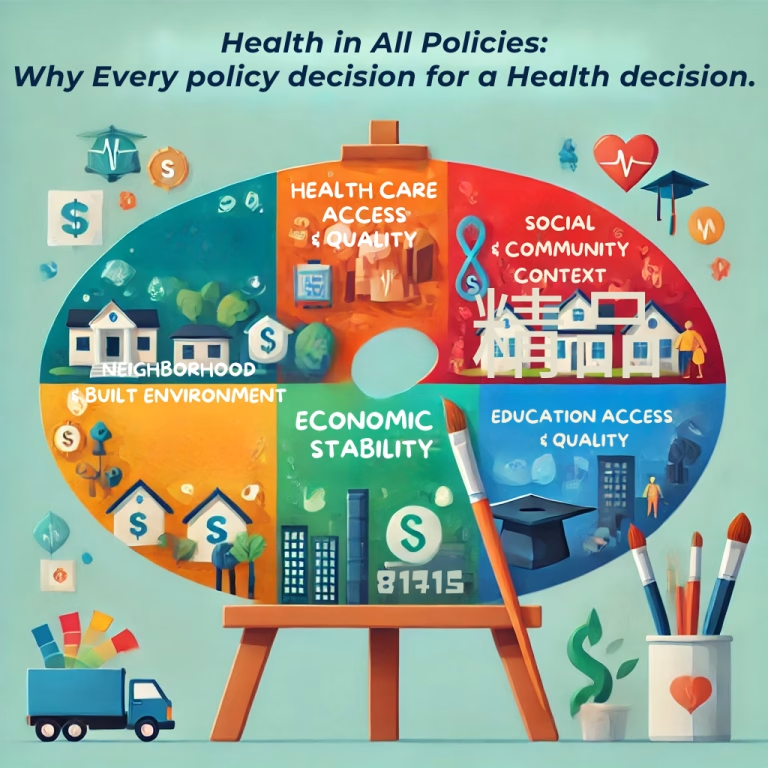
Think of social determinants of health like different sections of the band:
- Economic Stability (The Equipment): Just like you can’t play without instruments, you can’t maintain health without basic resources
- Healthcare Access (The Sheet Music): Having it available doesn’t help if you can’t read it or reach
- Education (The Music Lessons): Learning how to play – and how to take care of yourself
- Built Environment (The Practice Space): Where and how you can actually make it happen
- Social Context (The Band Members): Who’s playing with you and supporting you
And here’s the thing about making music – when one part is off, everything’s off. You can be the most talented musician in the world, but if your instrument is broken, your practice space is full of noise, and your music program got cut… well, you see where I’m going with this.
Let’s dive deeper into two crucial parts of this health symphony: the practice space (our built environment) and music education (our learning opportunities). Because just like in music, these fundamentals can make or break the whole performance.
The Practice Space: How Environment Shapes the Sound
Let’s talk about acoustics for a minute. You know how some spaces just make music sound better? While others seem to fight against every note? That’s exactly how our built environment affects our health.
Think about it: Just like you can’t expect someone to practice violin next to a construction site or create beautiful music in a moldy basement, we can’t expect communities to thrive when their environment works against them.
Here’s what I mean:
- Some neighborhoods got perfect acoustics:
- Clean air to breathe
- Parks and green spaces
- Grocery stores with fresh food
- Safe streets for exercise
- Easy access to healthcare
- Good public transportation
Meanwhile, other communities are trying to make health happen in spaces with:
- Bad acoustics:
- Air pollution from nearby highways
- No safe spaces for physical activity
- Food deserts for miles
- Limited healthcare facilities
- Unreliable public transit
- Run-down housing with health hazards
And just like a musician will tell you – it’s not just about one thing being off. That highway noise isn’t just about noise. It’s about:
- Air quality affecting breathing
- Traffic making walking dangerous
- Stress from constant noise
- Property values affecting resources
- Community spaces being cut off
See how one “acoustic” problem creates a whole symphony of health challenges? And here’s the thing – these aren’t natural acoustics. Someone designed these spaces this way. Someone decided where to put the highways, the grocery stores, the parks, and the pollution.
Music Education: More Than Reading Notes
Now, let’s talk about learning the music – because just like in health, it’s not just about having access to the notes, it’s about having the support to understand and use them.
Imagine trying to learn an instrument under these conditions:
- Your school cut the music program
- Private lessons cost more than your family makes in a month
- The only teacher who speaks your language is three towns over
- You’re working two jobs and can barely find time to practice
- Nobody in your community has ever played this instrument
Sound familiar? Because that’s exactly what trying to navigate health information feels like for many communities. It’s not just about “here’s some health pamphlets” or “just Google it.” Real health education is like learning music – it needs:
- Good Teachers (Healthcare Providers Who Understand Your Context)
- Proper Learning Materials (Accessible Health Information)
- Practice Time (Access to Health Resources)
- Cultural Connection (Health Messages That Resonate)
- Community Support (People Who Share Your Experience)
And just like music education isn’t just about reading notes, health literacy isn’t just about reading medical terms. It’s about:
- Understanding how the whole orchestra (your body and environment) works together
- Knowing when something sounds off (recognizing health issues)
- Having the resources to tune up (accessing healthcare)
- Being able to play with others (navigating health systems)
- Creating your own music (making informed health decisions)
Making Music Together: Creating Health Harmony
So now we see how our practice space (environment) and music education (health literacy) work together. When both are off? It’s like trying to learn violin in a thunderstorm – technically possible, but let’s be real about those odds.
But here’s the thing about music – and health: Even when conditions aren’t perfect, communities find ways to make it work. Think about how:
- Blues came from struggle but created beauty
- Jazz evolved by breaking traditional rules
- Hip hop turned limited resources into a whole new sound
- Community choirs make music without fancy concert halls
Our communities do the same thing with health:
- Creating food co-ops in food deserts
- Organizing walking groups for safety
- Sharing health knowledge through trusted networks
- Building community gardens in vacant lots
- Teaching each other to navigate health systems
But – and this is important – celebrating community resilience doesn’t mean accepting broken systems. Just like we shouldn’t have to rely on school bake sales to fund music programs, communities shouldn’t have to create workarounds for basic health needs.
What we need is:
- Better “Acoustics” (Healthy Environments):
- Clean air and water
- Safe spaces for activity
- Access to healthy food
- Reliable transportation
- Quality housing
- Strong “Music Education” (Health Resources):
- Culturally relevant health information
- Accessible healthcare
- Community health workers
- Health education programs
- Language appropriate services
The Final Note: Making Health Harmony Possible
Let me bring this all home. Understanding social determinants of health is like understanding what it really takes to make music. It’s never just about individual talent or effort – it’s about having the right conditions, resources, and support to make it happen.
Some communities are forced to perform miracles with broken instruments in noisy spaces, while others have full orchestras and perfect acoustics. That’s not about choice or chance – that’s by design. But here’s the thing about design: what humans design, humans can redesign.
We need to:
- Fix the acoustics (improve our environments)
- Fund the music programs (invest in health education)
- Maintain the instruments (ensure resource access)
- Support all musicians (create equitable systems)
- Let communities conduct their own orchestras (empower local leadership)
Because at the end of the day, health isn’t a solo performance – it’s a community symphony. And every community deserves the chance to play their best music.
Ready to join the band? Here’s what you can do:
- Learn about health conditions in your community
- Support organizations working for health equity
- Speak up about environmental health issues
- Share knowledge with your network
- Advocate for better health policies
Remember: Just like music can change how we feel, how we think, and how we move, understanding social determinants of health can change how we approach wellness, how we support our communities, and how we fight for better systems.
Let’s make some noise for health equity.