Healthcare Access? Insurance Doesn’t Guarantee Care in US

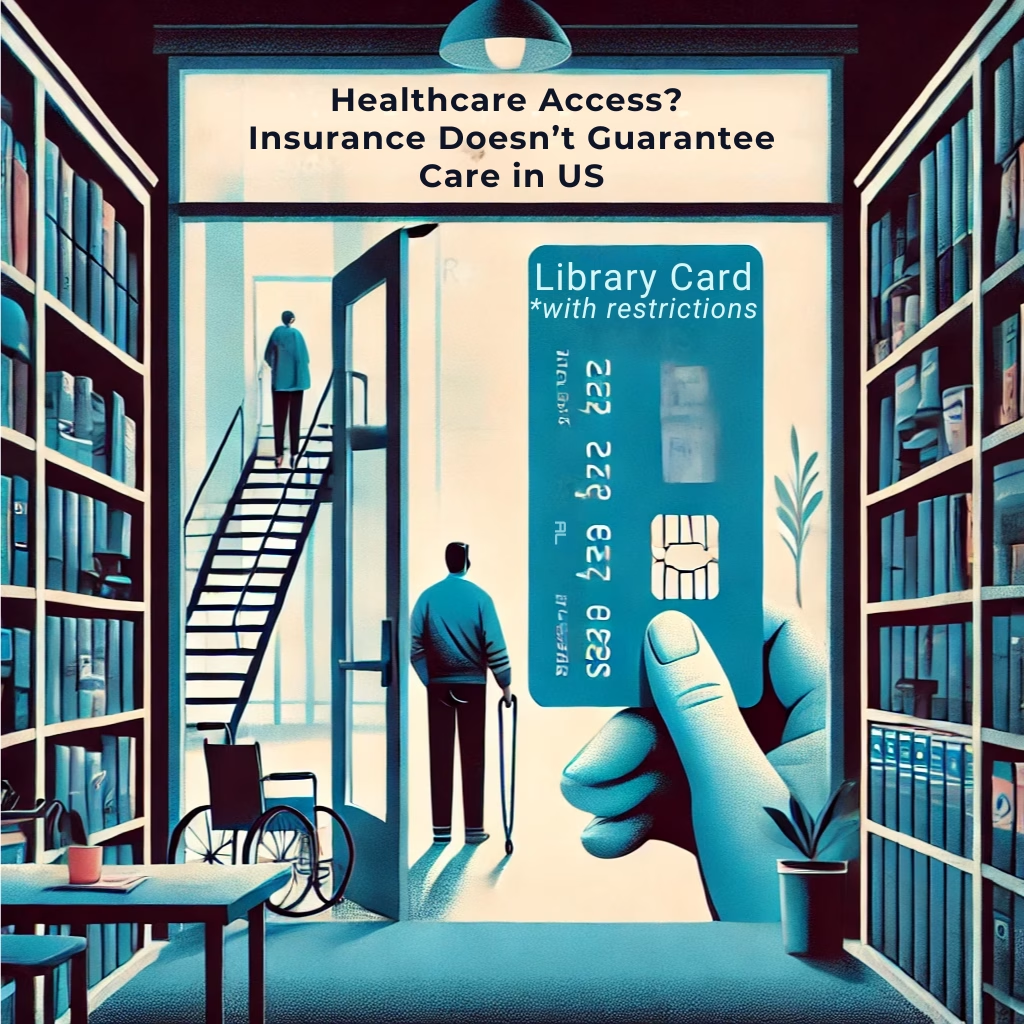
Healthcare Access in America is like having a library card for a system designed to make reading damn near impossible.
And trust me, that ain’t by accident.
Picture this: You finally get that shiny insurance card after jumping through all the hoops.
Maybe your job provides it, maybe you navigated the marketplace, maybe you qualified for Medicaid. But when you try to use it?
The library’s closed, the books are in a language you don’t understand, and the elevator’s broken. Meanwhile, other folks stroll right in like they own the place.
According to fresh CDC data, 21.7% of adults — that’s more than 1 in 5 people — couldn’t access healthcare in 2022 despite being insured. And the reasons? They’ll make your blood boil.
American Healthcare Access aka the Dysfunctional Library
We’re spending 17% of our GDP on healthcare — nearly $4.5 trillion in 2022 alone.
That’s double what other rich countries spend. We’re building the fanciest medical libraries in the world, buying the most expensive equipment, paying the highest salaries… and somehow still running a system where basic care feels like trying to check out a book from a dungeon.
Imagine a library where:
- The building’s only open during hours most working folks can’t make it
- Most books are written in languages the community doesn’t speak
- The elevator’s broken, making access impossible for some
- And half the librarians won’t even accept your “approved” library card
- Every floor requires different membership levels
- And the late fees can bankrupt your whole family
Sound ridiculous? Welcome to American healthcare, where having insurance is just your ticket to a whole new maze of obstacles.
The Price Tag of Dysfunction: Breaking Down America’s Healthcare Numbers
Let’s talk about what we’re actually buying with all this money, because these numbers will have you questioning everything:
Administrative Waste: The Hidden Tax
- We spend about $1,055 per person just on administrative costs
- That’s four times what Canada spends for their entire system’s administration
- We’re literally spending more on paperwork than some countries spend on actual healthcare
The Network Shell Game
- 26 million Americans still don’t have coverage
- A quarter of working Americans are “underinsured”
- Even with insurance, 4.4% couldn’t find providers accepting their plans
- Networks change more often than some people change their oil
The Global Embarrassment
The Commonwealth Fund’s Mirror, Mirror 2024 report just dropped the receipts:
- We rank dead last among 10 high-income countries for healthcare performance
- We’re spending way more for way less
- Countries like Australia and the Netherlands are getting better results while spending half what we do
This isn't about not having enough money.
We're spending more than enough — we're just spending it wrong. We built a system that's great at making profit but terrible at providing care.
The Barriers Behind the Card: Why Healthcare Access Isn't Just About Insurance
The Time Poverty Trap
Remember that 12.5% who couldn't get care because they were "too busy"?
- 14% of women vs. 10.9% of men faced this issue
- For working-age adults (18-34), it jumps to 18.4%
- Nearly 20% of low-wage workers report skipping care due to work conflicts
When you're working two jobs just to keep the lights on, "just take time off" isn't just unhelpful advice — it's a slap in the face.
And for hourly workers? Taking time off for healthcare means choosing between your health and your rent.
The Language of Exclusion
Imagine finally getting into that library just to find out none of the books are in your language. Now imagine it's your health on the line:
- Limited English proficiency affects over 25 million Americans
- Cultural competency remains an afterthought in medical education
- Studies show non-English speakers receive lower quality care
- Medical terminology is its own language barrier, even for native speakers
The Geographic Games
That 4.6% who couldn't physically get to a provider? That's just the tip of the iceberg:
- Rural hospital closures have created healthcare deserts across America
- Over 80% of rural counties lack adequate OB-GYN care
- Some communities face 3+ hour drives for specialty care
- Public transportation to medical facilities is often nonexistent
The Network Trap
Let's talk about that 4.4% who couldn't find providers accepting their insurance:
- Provider directories are often outdated
- Networks change without notice
- Specialists are particularly hard to access
- Emergency care often leads to surprise billing despite network status
The Real Cost of Restricted Healthcare Access: Beyond the Numbers
When we talk about healthcare access, we're not just talking about convenience — we're talking about life and death. Let's break down what these barriers actually cost us:
Individual Impact: When Care Delayed Becomes Care Denied
- Minor issues become major emergencies
- Preventable conditions become chronic
- Mental health challenges escalate without early intervention
- Financial stability gets sacrificed for basic care
- Career advancement gets limited by health constraints
Community Cost: The Ripple Effect
This ain't just about individual tragedies — it's about community devastation:
- Health disparities that follow zip codes
- Economic ripple effects when breadwinners can't work
- Communities losing hospitals and never getting them back
- Generational trauma from a system that treats some lives as more valuable than others
- Loss of community wealth through medical debt
The Equity Crisis
The Commonwealth Fund's report exposed some ugly truths:
- The U.S. ranks last on equity among peer nations
- Income-related health disparities are highest in America
- Racial and ethnic minorities face compounded barriers
- Even with similar education and income, disparities persist
So I repeat, how exactly is this healthcare access?
Global Receipts: How Other Countries Make It Work
Other libraries are ran, like well, accessible libraries, where members and even non members can benefit from services and offerings.
The Netherlands Model
- Universal coverage without the maze
- Primary care that's actually accessible
- After-hours care as a standard
- Administrative simplicity
Australia's Approach
- Mixed public-private system that actually works
- Better outcomes across the board
- Half our spending per capita
- Focus on prevention
Japan's Success Story
- Highest life expectancy
- Universal coverage that works
- Cultural adaptation of care
- Cost control without compromise
These countries aren't doing anything magical. They just decided healthcare shouldn't be a luxury brand.
They built systems where:
- Administrative costs don't eat half the budget
- Prevention doesn't require premium access
- Universal coverage means actually being able to use services
- And profit isn't prioritized over people
The Solution: Beyond Just Handing Out Library Cards
We need more than just insurance cards — we need a complete system redesign:
Building a Better System: Beyond Band-Aid Solutions
Real solutions ain't about slapping new paint on a crumbling building. When your library's fundamentally broken, you don't just extend the hours – you rebuild the whole damn thing from the ground up.
Structural Solutions: Redesigning the Whole Building
Healthcare Access Redesign: Making the Library Actually Usable
Look at the Netherlands – they didn't just build prettier buildings, they redesigned the whole concept of access:
- Extended hours that match real life, not banker's hours
- Evening and weekend care as standard, not luxury
- Mobile clinics bringing care to communities
- Virtual care options that actually work
- Walk-in services for basic needs
- Care coordination that doesn't require a PhD to navigate
You know what hits different about their system? They designed it for users, not profits. Wild concept, right?
Administrative Overhaul: Stopping the Paper Chase
We're spending $1,055 per person just on pushing paper – that's four times what Canada spends on their entire administrative system. Here's how we fix that mess:
- One standardized billing system (like every other developed nation)
- Universal forms that actually make sense
- Automated eligibility verification
- Real-time cost transparency
- Simplified authorization processes
- Digital health records that actually talk to each other
The wildest part? These aren't radical ideas – they're standard practice everywhere else in the developed world.
Provider Support: Giving Healthcare Workers What They Need
Australia's killing it here. They've figured out that supporting providers means better care for everyone:
- Fair distribution of medical resources based on community needs
- Robust community health worker programs
- Real incentives for serving underserved areas
- Mandatory cultural competency training
- Work-life balance that prevents burnout
- Education support that doesn't create lifetime debt
When providers aren't drowning in paperwork and debt, they can actually focus on what matters – patient care.
Policy Prescriptions: Changing the Rules of the Game
Let's talk about what real policy change looks like – because "thoughts and prayers" don't fix broken systems.
Immediate Actions: Stop the Bleeding
We need immediate interventions that can start saving lives today:
Administrative Simplification:
- Standardized billing codes across all providers
- Universal prior authorization processes
- Simplified enrollment systems
- Automated eligibility verification
- Real-time benefits checking
Network Adequacy Requirements:
- Minimum provider-to-patient ratios by specialty
- Maximum wait times for appointments
- Geographic distribution requirements
- After-hours care mandates
- Specialist availability guarantees
Transportation and Access:
- Covered medical transportation
- Mobile health services
- Telehealth integration
- Community-based care centers
- Home care options
Language and Cultural Access:
- Mandatory interpreter services
- Translated materials requirements
- Cultural competency standards
- Community health worker integration
- Diverse provider recruitment
Long-term Changes: Building for the Future
Here's what hits different about long-term change – it ain't just about fixing what's broken, it's about building what should have been there all along:
Universal Healthcare Access Framework:
- Coverage that follows people, not jobs
- Standardized benefit packages
- Elimination of network restrictions
- Simplified enrollment processes
- Automatic coverage at birth
Provider Incentive Reform:
- Value-based care that actually values care
- Support for primary care providers
- Rural practice incentives
- Education debt relief
- Work-life balance protection
Community Health Investment:
- Local health center funding
- Public health infrastructure
- Community health worker programs
- Prevention programs
- Social determinants addressing
Prevention-Focused Funding:
- Early intervention programs
- Health education initiatives
- Screening program support
- Environmental health investment
- Social support integration
Here's the truth about these changes: They ain't radical – they're rational.
Every other developed nation has figured this out. The only thing stopping us is the profit machine that's been built on our broken system.
If everyone's doing something different and we're the only ones with that big of a problem, it seems like we should probably reflect on our operations, no?
Like in what world can we keep deflecting and projecting, saying we number one and the best when we spend the most on healthcare but get the least, while having the lowest stats?
Remember: The Netherlands didn't just decide one day to have better healthcare – they built it, step by step, policy by policy.
Australia didn't magically get better outcomes – they designed a system that actually serves people.
And Japan? They didn't achieve the world's highest life expectancy by accident – they prioritized access over profit.
Oh, and there was a point where American life expectancy was leaps and bounds above Japans', so, impactful chnges have been made there.
The solutions are right there. The evidence is clear. The only question is: Are we ready to admit that our current system is designed to fail most people while profiting a few?
And even past admitting, will we confront this and reform?
The Bottom Line: Time to Build a Better System
Let me be clear: Healthcare access isn't about not having enough money.
We're spending more than enough — we're just spending it wrong. We built a system that's great at making profit but terrible at providing care.
The solution isn't just giving everyone a library card — it's about:
- Building healthcare facilities where people actually live
- Providing care that speaks the community's language
- Designing systems that work for everyone, not just the privileged
- And finally admitting that access without usability isn't access at all
Next time somebody says "just get insurance," remind them: A library card doesn't mean much if you can't actually use the library.
And right now? America's running the world's most expensive library system that a majority of its community members can't actually use.
It's time to stop pretending this is about individual choice and start admitting it's about systemic design. Because until we fix the system, we're just handing out cards to locked buildings and calling it healthcare access.
The cost of getting this wrong isn't just measured in dollars — it's measured in lives. And that's a price none of us should be willing to pay anymore.